Regulatory & Legal Security

Use Encryption to Support Major Compliance Requirements

Editorial Team · Updated July 2026 · 14 Min Read

Data privacy laws hold businesses financially liable for leaked data. Navigating complex data privacy rules doesn't require a law degree, but it does require understanding exactly what "encryption at rest" and "encryption in transit" mean for your selected industry.

Quick Answer

What is encryption for compliance? It is the legal and regulatory mandate to encode sensitive data (like patient health information or credit card numbers) so it remains unreadable if stolen. Standards like HIPAA, PCI DSS, and GDPR universally recognize AES-256 bit encryption as the baseline standard for securing data at rest. Failing to implement recognized cryptographic standards can result in severe fines, even if a breach never occurs.

Illustrated encryption explainer showing protected digital information for compliance
Industry Insights

Frequent IT Management Queries Addressed in this Guide

As organizations audit their data residency laws impact on multi-cloud security, certain recurring challenges emerge for IT managers and startup founders:

Sensitive personal data represented as protected records for privacy compliance
Assessment Tool

Compliance Risk & Method Selector

Select your primary scenario below to see which regulatory framework applies to you and what encryption level is required.

What type of data are you primarily storing or transmitting?

Security audit trail and data logging interface used for compliance monitoring

Regulatory Compliance Encryption Requirements

Encryption compliance requirements for businesses vary wildly by jurisdiction and industry. Here is how the big four frameworks treat data encryption.

Healthcare Encryption (HIPAA)

Under the HIPAA Security Rule, encryption is classified as an "addressable" safeguard. This causes immense confusion. Addressable does not mean optional. It means you must implement encryption for data at rest and data in transit, or implement an alternative measure that is strictly equivalent. In modern IT, there is no equivalent to encryption. Therefore, HIPAA data storage encryption requirements effectively mandate AES-256 encryption.

Payment Card Industry Data Security Standard (PCI DSS)

PCI DSS encryption requirements are absolute. You cannot store the full magnetic stripe data after authorization, ever. For Primary Account Numbers (PANs) that you do store, you must render them unreadable anywhere they are stored (PCI DSS Requirement 3). Organizations often debate PCI DSS tokenization vs encryption. Tokenization replaces the PAN with a surrogate value, removing the system from PCI scope. Encryption mathematically transforms the PAN, meaning the system remains in scope but satisfies the requirement.

Additionally, PCI DSS 4.0 password requirements dictate minimum lengths, complexity, and mandatory multi-factor authentication (MFA) to access cryptographic keys.

Data Privacy Laws (GDPR & CCPA)

GDPR data encryption requirements (Article 32) state controllers must implement appropriate technical measures, specifically naming "pseudonymisation and encryption of personal data." A massive benefit of GDPR encryption is the safe harbor provision: if encrypted data is breached, but the encryption keys remain secure, you may not be required to notify affected individuals, saving massive reputational damage.

SOC 2 Encryption Requirements

For SaaS companies, SOC 2 Type II audits scrutinize the "Security" and "Confidentiality" trust service criteria. Auditors will demand proof of AES-256 bit encryption for all client data at rest, and TLS 1.2+ for data in transit. This is vital for data privacy protection in sales prospecting and client onboarding.

Enterprise security tools protecting regulated business information across systems
Technical Explainer

How Modern Encryption Algorithms Work

You don't need to be a cryptographer, but understanding the difference between AES-128 and AES-256 encryption, and symmetric vs asymmetric keys, is critical for compliance.

Symmetric vs Asymmetric

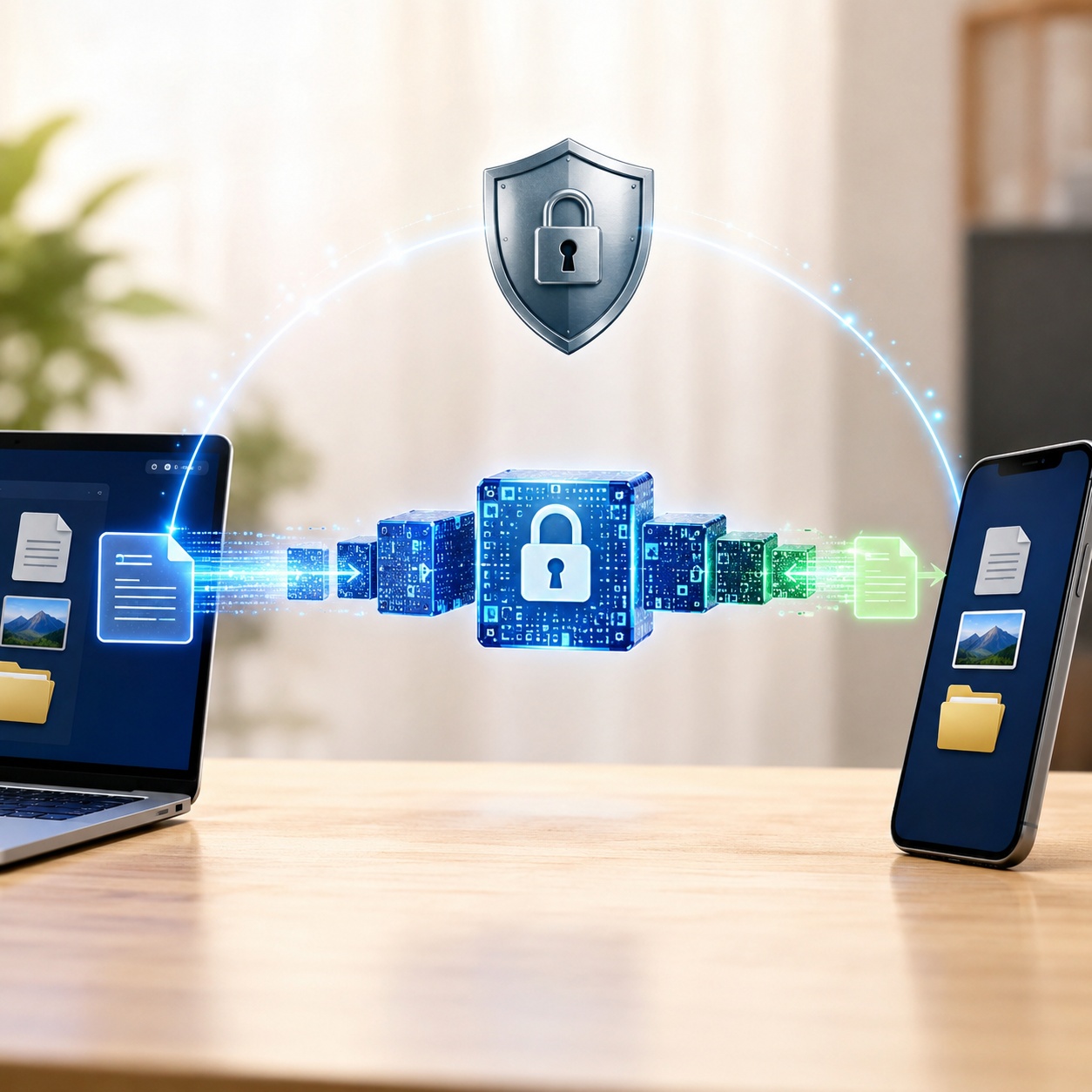
To lock and unlock the file (like a padlock key), Symmetric encryption relies on the same key. It is incredibly fast and used for data at rest (disk encryption). To lock and a private key to unlock, Asymmetric relies on a public key. It is used for data in transit (SSL/TLS).

AES-256? Explained

Advanced Encryption Standard (AES) is a symmetric cipher approved by the NSA and NIST. The "256" refers to the key length. AES-128 has 3.4 x 10^38 possible keys. AES-256 has 1.1 x 10^77. To put that in perspective, cracking AES-256 with current supercomputers would take billions of years. It is the gold standard for bank-grade data encryption and the baseline for HIPAA and GDPR.

Data Residency Encryption

Data residency laws impact on multi-cloud security since some nations dictate data cannot leave their borders. Encryption helps here: if data is stored in a foreign data center, but you hold the keys locally, you maintain cryptographic jurisdiction over that data.

Hardware vs Software Encryption

To encrypt drives, Hardware encryption relies on a dedicated chip (like a TPM). It has zero performance impact but requires selected hardware. Software encryption (like BitLocker or external file encryption software) runs on the CPU. Modern CPUs handle AES instructions natively, making the performance impact of full disk encryption negligible.

Digital data protection vault illustrating encrypted information at rest
Implementation Guide

Choosing the Right Encryption Method

How you ensure compliance with cloud security regulations in a data center environment or on a local laptop relies on the approach you choose.

Method 1: Native OS Encryption (Full Disk) Moderate

Windows BitLocker and macOS FileVault provide full disk encryption (FDE). This encrypts the entire hard drive.

manage-bde -status manage-bde -on C: -RecoveryPassword

* Command-line check for BitLocker status in Windows environments.

Full disk encryption software protecting a business laptop and stored files
"Full disk encryption checks a compliance box for physical theft, but file-level encryption is required to protect against network intrusion and insider threats." — IT Compliance Auditor
approach 2 — Dedicated Compliance Software

Reasons We Recommend Folder Lock for File-Level Compliance

Native disk encryption is not enough for granular data privacy law requirements. Organizations need folder-level AES-256 encryption that stays locked even while the machine is running, allowing access only to authorized personnel.

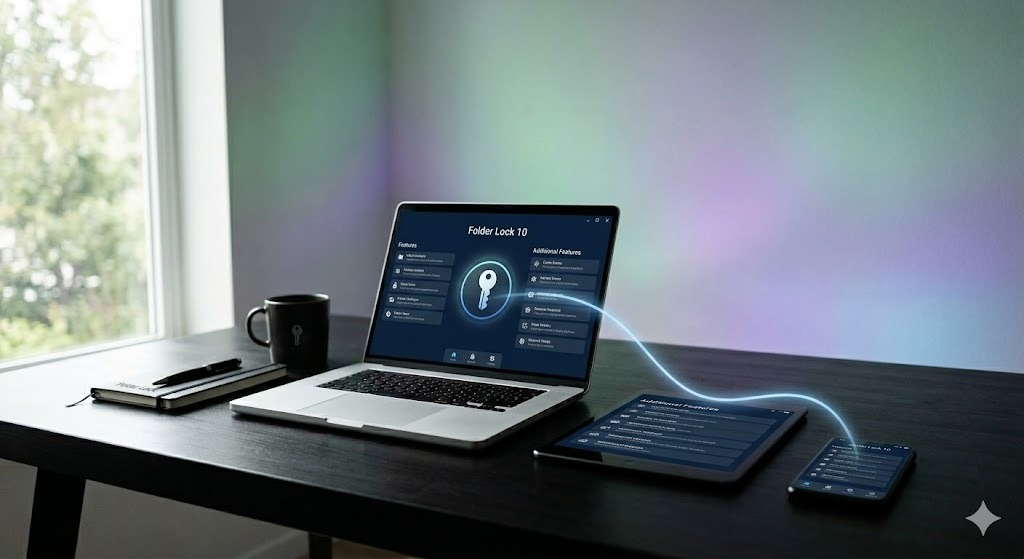
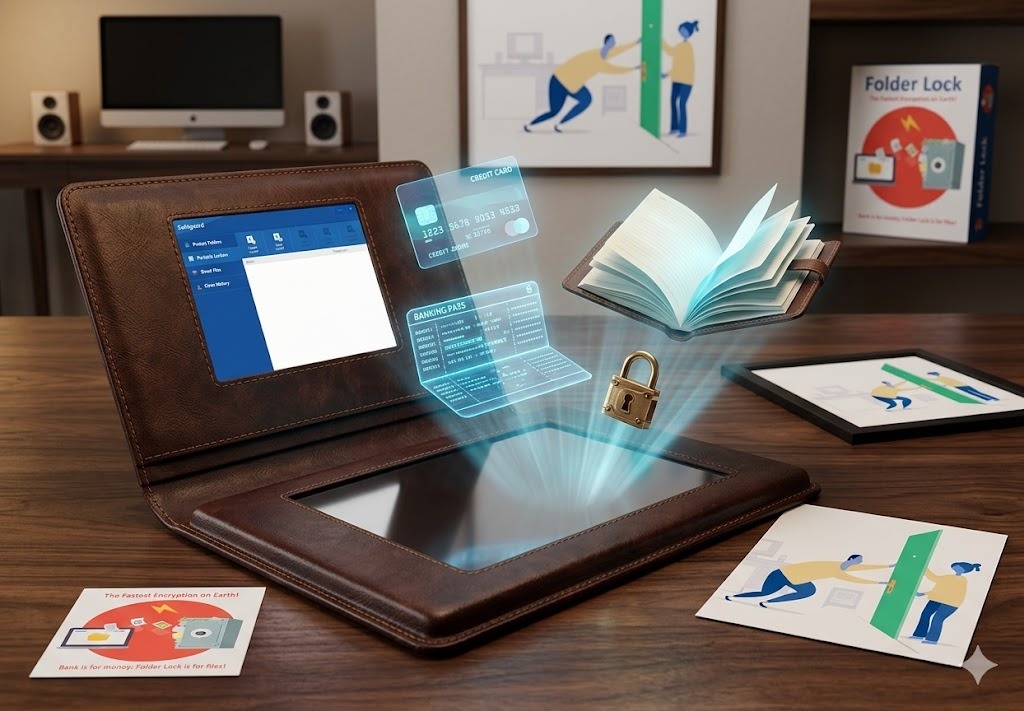
Folder Lock 10 product box for Windows file encryption software Secure virtual drive concept illustrating an encrypted Folder Lock locker
AES-256 Bit Encryption Meets HIPAA/GDPR Specs On-the-Fly Decryption

How Folder Lock Bridges the Gap

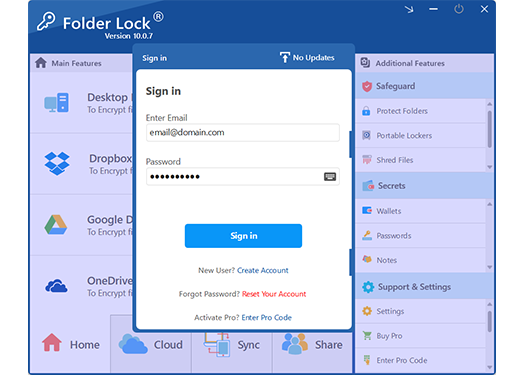
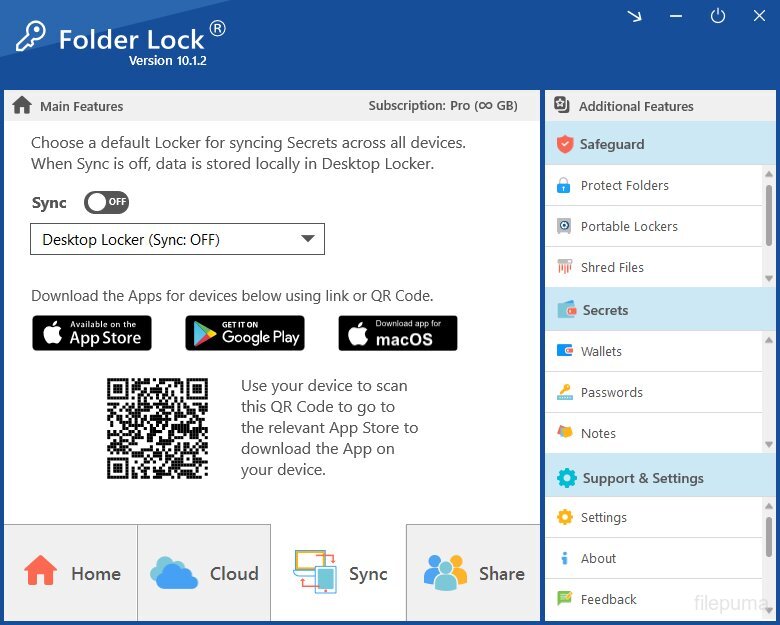
Folder Lock creates secure, encrypted Lockers (virtual drives) on your PC or network. Unlike BitLocker, which unlocks the whole drive upon Windows login, a Folder Lock Locker remains heavily encrypted until specifically mounted with its unique password. This granular approach is exactly what is needed for:

  • HIPAA: Securing selected folders containing patient billing records while leaving general system files accessible to standard IT staff.
  • USB Encryption: Creating portable, 256-bit encrypted USB flash drives that remain secure if dropped in a parking lot.
  • Secure Backups: Encrypting files before they sync to Dropbox or OneDrive, preventing cloud hosts from scanning sensitive data.
Download Free Trial → View Pricing & Licenses →

Folder Lock offers a free evaluation period. The full commercial license offers unlimited secure Lockers, secure USB creation, and secure backup integrations, making it highly cost-effective for small practices compared to enterprise key-management servers.

Product Scope & Boundaries

Platform Coverage, Feature Differences & Practical Limits

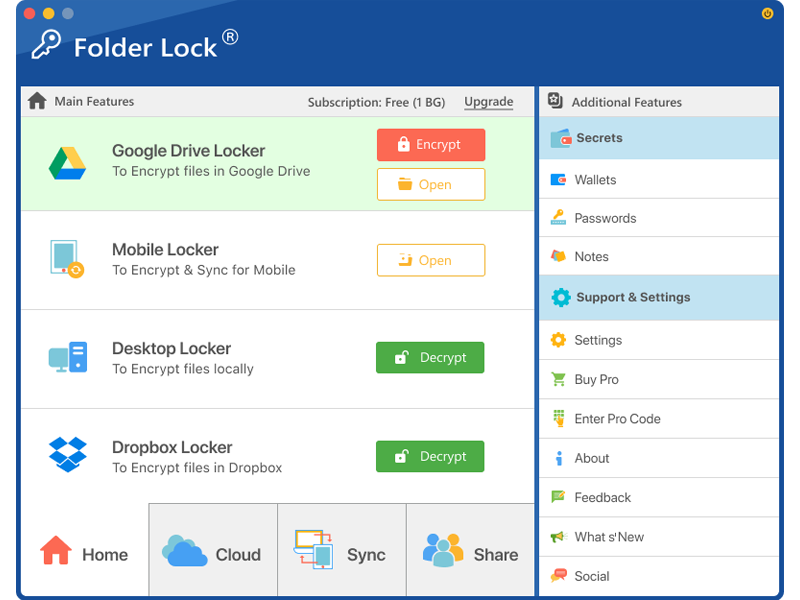
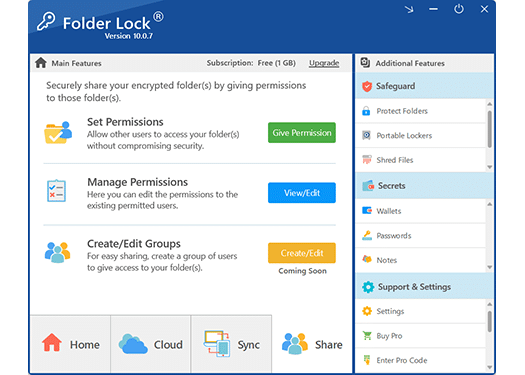
Folder Lock is positioned as a layered file-security suite instead of a compliance certificate. Its desktop editions concentrate on encrypted storage, controlled folder access, cloud-connected lockers, sharing, portable protection, and privacy cleanup. Mobile editions extend the model to private media, documents, notes, credentials, and backed-up app data.

Windows

The Windows edition combines encrypted virtual lockers with folder locking, portable locker creation, secure deletion, history cleaning, cloud-based storage connections, and user-based sharing. The locking and encryption tools serve various purposes, so teams should decide whether they need concealment, access restriction, cryptographic protection, or a combination.

MacOS

The Mac edition supports local and cloud-linked lockers, protected notes, device synchronization, and controlled sharing. Platform materials specify macOS 13 or later, making operating-system compatibility an important pre-deployment check.

Android & iOS

The mobile apps protect photos, video, documents, audio, notes, and wallet-style records. While Android adds app locking and iOS includes local Wi-Fi transfer, Both platforms include cloud backup and access-attempt monitoring. Mobile and desktop editions should not be assumed to have identical controls.

Licensing & Recovery

Free and paid editions differ in storage capacity, device synchronization, sharing, and advanced safeguards. Current license terms should be confirmed before rollout. Encrypted locker passwords also require a documented recovery and custody process since strong encryption is built to resist bypass.

Compliance boundary: Encryption software can support technical safeguards, but it does not make an organization compliant on its own. Access reviews, key ownership, retention rules, incident response, staff training, audit evidence, and a documented risk assessment remain separate responsibilities.

Native vs. Dedicated Software Comparison

When auditing the best encryption software for regulatory compliance hipaa gdpr pci dss, here is how native tools stack up against dedicated file-level software.

Compliance function BitLocker / FileVault Folder Lock
Protects against physical theft
AES-256 Cryptography
Stays locked while PC is in use
Encrypts portable USB drives securely
Cloud-agnostic pre-sync encryption
Granular folder-level access control
Cross-platform synchronization of encrypted files between computers and mobile devices
Implementation Support

Frequent Errors and Implementation Fixes

Deploying encryption software for small business or large healthcare networks can result in user lockouts. Here are secure, owner-safe recovery notes.

Cause: The TPM (Trusted Platform Module) chip detects a hardware change and locks the drive to prevent a tampering attack.

Fix: You must enter the 48-digit BitLocker recovery key. This should have been saved to a network directory, printed, or saved to an Active Directory/Azure AD account during setup. Without this key, AES-256 encryption cannot be bypassed.

Cause: Lost credentials. Strict compliance software does not have "backdoors."

Fix: If you lose the password to a selected encrypted Locker, the data is permanently unrecoverable by design (this is what satisfies compliance auditors). That said, if you forgot the primary application password but have the original license serial number, you can verify software ownership through official vendor channels to regain interface access, though individual Lockers still require their passwords.

Cause: Software-based encryption on older CPUs without AES-NI instruction sets, or encrypting massive database files over a slow network connection.

Fix: Modern processors (Intel Core i-series/AMD Ryzen) handle AES instructions at the hardware level. Ensure hardware acceleration is enabled in BIOS. If network storage is slow, utilize local SSDs for encrypted Lockers and sync them asynchronously.

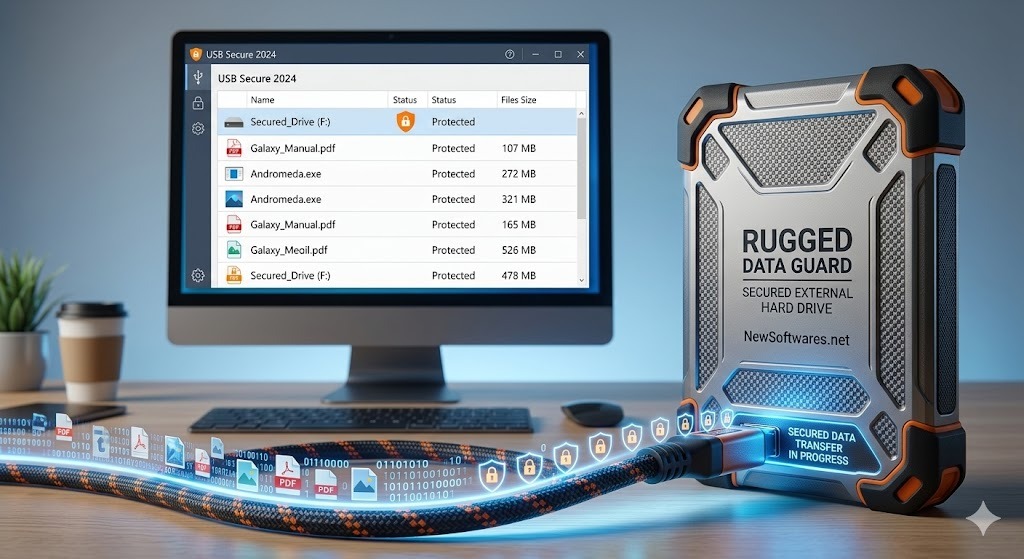
Encrypted external hard drive used for secure backup and recovery planning

Related Security Tools from NewSoftwares

Folder Lock is developed by NewSoftwares.net. Depending on your exact compliance scope, you may also consider:

USB Secure

Standalone portable password security for external drives, ideal for accountants sharing files.

Cloud Secure

Specifically designed to lock Dropbox, Google Drive, and OneDrive folders.

USB Block

Endpoint security to block unauthorized USB devices, satisfying stringent physical security policies.

frequent Questions

Common Questions and Answers

What is Encryption for Compliance for Healthcare, Finance & Legal?
It is the legal obligation to use cryptographic standards (like AES-256) to protect sensitive client, patient, or financial data from access by unauthorized users. Frameworks like HIPAA, GDPR, and PCI DSS all mandate these safeguards.
Can law enforcement decrypt AES-256 encrypted data?
Without the password or the encryption key, no. AES-256 is mathematically secure against brute-force attacks by current technology, which is why it is approved by the NSA for Top Secret information.
What is the difference between AES-128 and AES-256 encryption?
Key length. While AES-256 uses a 256-bit key, AES-128 uses a 128-bit key. While both are considered secure, AES-256 is the standard for regulatory compliance in healthcare and finance due to its resistance to future computing advancements.
Which Cloud File Security Tools Help Healthcare IT Managers Meet HIPAA?
Tools that provide client-side encryption (like Folder Lock) before data is uploaded to the cloud ensure HIPAA compliance. If the cloud provider cannot see the data, a breach of their servers does not expose patient records.
What happens to encrypted files if I forget the password?
True compliance-grade encryption software does not have a "forgot password" link that bypasses the encryption. If the password is lost and no backup key was created, the data remains permanently locked. Password management is a critical component of compliance.
Is open-source encryption software as secure as commercial products?
Mathematically, yes, if they use the same AES algorithms. That said, commercial products often provide better enterprise key management, dedicated support, and easier user interfaces, which reduces the risk of human error—the leading cause of compliance failures.
Key Takeaways

Meeting compliance for HIPAA, GDPR, and PCI DSS requires more than a standard Windows login. You must prove that sensitive data at rest is cryptographically secured against network intrusion and insider threats.

For organizations looking for a reliable, user-friendly way to implement file-level AES-256 encryption, we highly recommend evaluating Folder Lock to satisfy these regulatory requirements.

Get Folder Lock Free → Get the full version →