What is Encryption for Compliance for Healthcare, Finance & Legal?
It is the legal obligation to use cryptographic standards (like AES-256) to protect sensitive client, patient, or financial data from access by unauthorized users. Frameworks like HIPAA, GDPR, and PCI DSS all mandate these safeguards.
Can law enforcement decrypt AES-256 encrypted data?
Without the password or the encryption key, no. AES-256 is mathematically secure against brute-force attacks by current technology, which is why it is approved by the NSA for Top Secret information.
What is the difference between AES-128 and AES-256 encryption?
Key length. While AES-256 uses a 256-bit key, AES-128 uses a 128-bit key. While both are considered secure, AES-256 is the standard for regulatory compliance in healthcare and finance due to its resistance to future computing advancements.
Which Cloud File Security Tools Help Healthcare IT Managers Meet HIPAA?
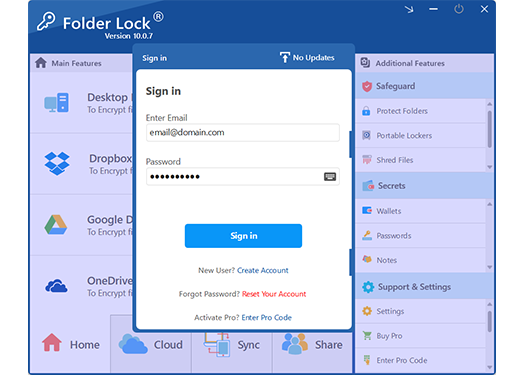
Tools that provide client-side encryption (like Folder Lock) before data is uploaded to the cloud ensure HIPAA compliance. If the cloud provider cannot see the data, a breach of their servers does not expose patient records.
What happens to encrypted files if I forget the password?
True compliance-grade encryption software does not have a "forgot password" link that bypasses the encryption. If the password is lost and no backup key was created, the data remains permanently locked. Password management is a critical component of compliance.
Is open-source encryption software as secure as commercial products?
Mathematically, yes, if they use the same AES algorithms. That said, commercial products often provide better enterprise key management, dedicated support, and easier user interfaces, which reduces the risk of human error—the leading cause of compliance failures.